The new plan buys faster access to Astra, but switching on its highest speed also spends the included allowance much faster.
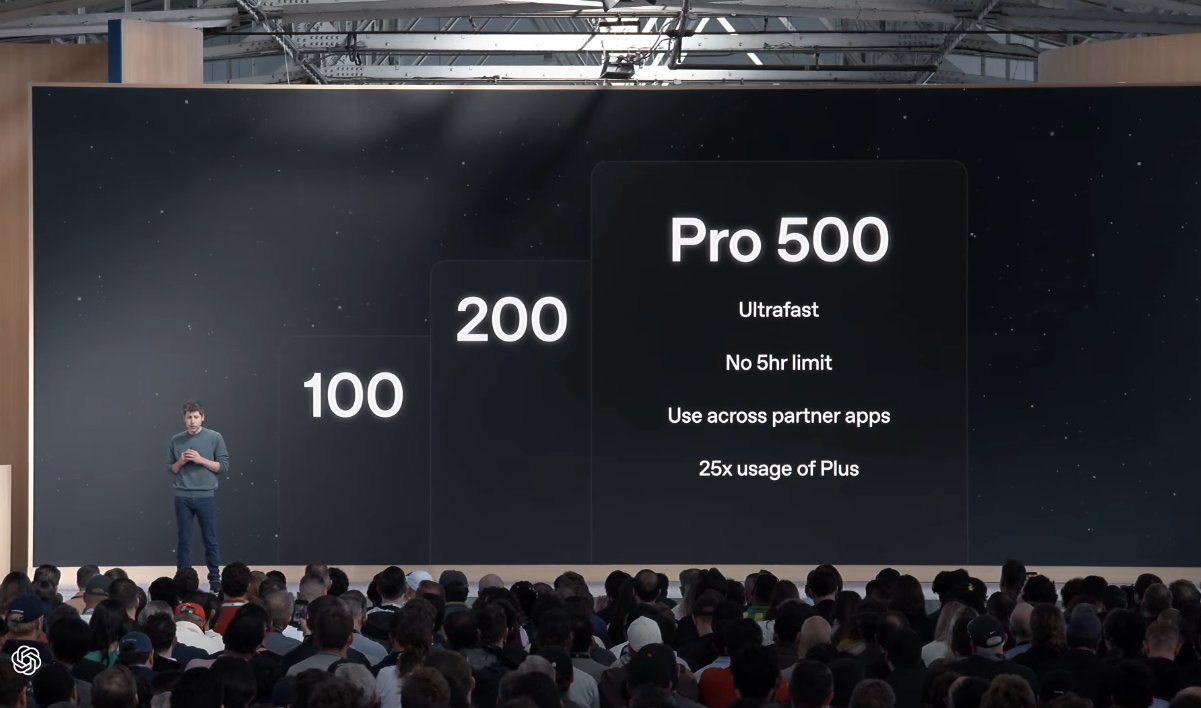
The new plan buys faster access to Astra, but switching on its highest speed also spends the included allowance much faster.
OpenAI says it has brought more capacity online for GPT-6.1 Sol in ChatGPT and Codex after heavy demand strained the service. It says speed should improve over the coming hours, reaching almost twice what users received the previous day.
That is a forecast for the capacity upgrade, not a measured doubling of completed-task speed. The promise specifically covers ChatGPT and Codex; although the post also reports exceptionally high API demand, it does not promise the same API speed increase.

GPT-6.1 Sol is our most demanded model pretty much ever both across both the API and subscriptions. Within ChatGPT & Codex, we were under heavy load, but have brough more capacity online and the speed should get much better in the coming hours, reaching almost twice the speed compared to what we served yesterday.
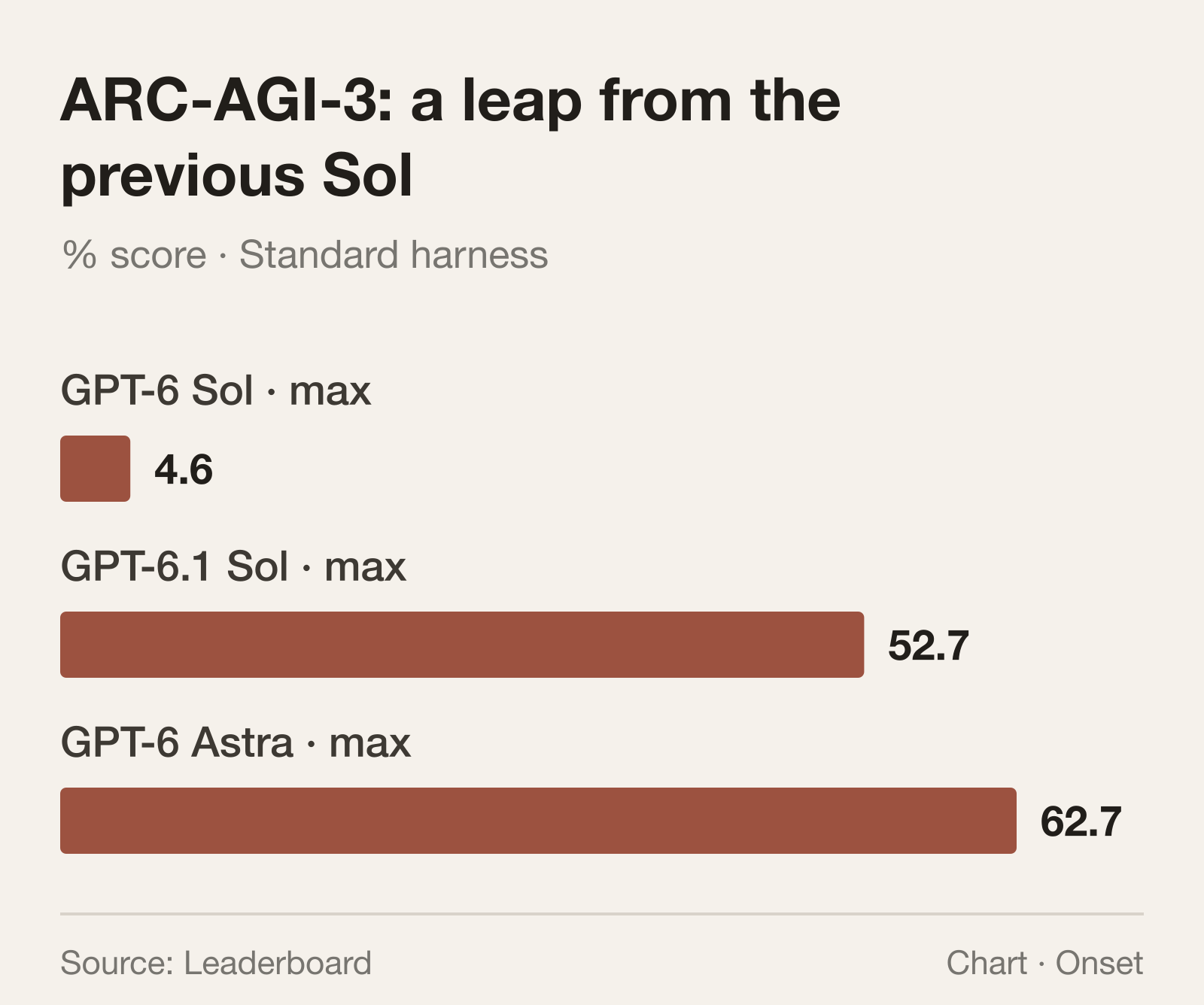
New independent results strengthen GPT-6.1 Sol’s case as a cheaper alternative to Astra. On ARC-AGI-3, which tests agents learning unfamiliar interactive games, it makes a large jump over the previous Sol.
With both models at maximum reasoning effort in ARC’s Standard harness, Sol 6.1 scores 52.7%, up from Sol’s 4.6%. Astra still leads at 62.7%. These scores measure performance relative to human action efficiency, not the percentage of ordinary work an agent can complete.
The software around the model makes another big difference. The Standard setup lets it carry forward chosen notes; the Provider Adapter also preserves its internal reasoning state and compresses long conversations so it can reuse earlier work. With that adapter, at maximum effort, Sol 6.1 reaches 96.2% versus Astra’s 98.6%, at listed costs of $3,800 versus $17,300, about 78% less. Both evaluation setups are verified by ARC Prize.
Separately, Sol 6.1 enters third on Arena’s WebDev leaderboard, behind Opus 5.5 and Astra, with 1,264 votes. Users compare generated web apps, such as a chess game, and choose the better one. Its lead over fourth-place Fable 5.1 falls within overlapping uncertainty ranges, but the improvement over the previous Sol, now seventh, is clearer.
Sol’s input and output token rates are one-fifth of Astra’s on Arena’s table. That is not a measured fivefold saving per web app: longer answers and retries affect the bill. Still, the two evaluations add evidence that this cheaper model is catching up on both interactive reasoning and web-app building.
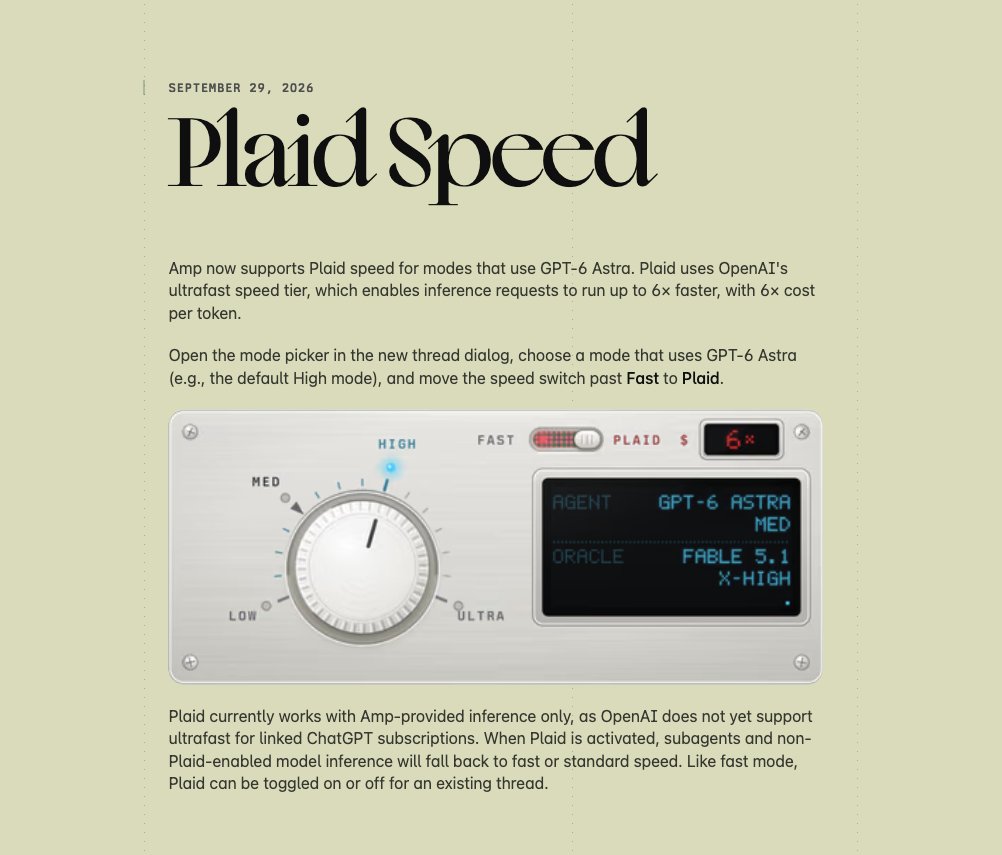
Amp, the AI coding tool, now offers OpenAI’s Astra Ultrafast tier as Plaid speed. Amp says it runs model requests up to six times faster, at six times the cost per token. It is a paid shortcut for users who want less waiting without switching away from Astra.
The catch: Plaid requires Amp-provided inference; linked ChatGPT subscriptions cannot fund it. In Amp’s mode picker, choose a mode using GPT-6 Astra and move the speed switch past Fast to Plaid. You can also turn it on or off in an existing thread.
The speed claim applies to model requests, not a guarantee that an entire coding job finishes six times sooner. Amp says subagents and models without Plaid support fall back to Fast or Standard speed.
GitHub is rolling out GPT-6.1 Sol to Copilot Pro+, Max, Business and Enterprise users, letting developers try the cheaper model without moving their work to Codex. It is generally available, but access is arriving gradually.
Select it in Copilot’s model picker, including in Visual Studio Code, JetBrains IDEs, the CLI and GitHub’s coding agent. GitHub says the model is billed at provider list pricing under usage-based billing.
For workplace accounts, administrators can control access through model policies. Under GitHub’s default settings, new models are enabled automatically unless an administrator has disabled that default or this model specifically.
Artificial Analysis’s independent results back the core promise of GPT-6.1 Sol: performance close to Astra at a much lower bill. At maximum reasoning effort, Sol scores 52 on its Intelligence Index versus Astra’s 53, with a weighted average cost of $0.72 per task versus $3.26, about 78% less. The index combines tests of coding, knowledge, reasoning and professional work; its score is not a percentage of jobs completed.
That is also a meaningful upgrade over GPT-6 Sol, which scores 48 and costs $1.06 per task at maximum effort. The new model scores higher while costing about a third less on this test suite.
This strengthens the case for trying Sol on work previously reserved for Astra: the savings now show up in an outside evaluator’s actual token usage, not just OpenAI’s launch charts or token prices. It does not make Sol the overall leader. Claude Opus 5.5 scores 58 and Sonnet 5.5 scores 56 at maximum effort with their default fallback models enabled.