

Google has announced Gemini 4 Argon, a new frontier model for coding, professional work and cybersecurity. Access starts today with selected cyber defenders in its Fairwind Program; paid API customers and Google AI Ultra subscribers will be first in the broader rollout. Google has not set a public release date.
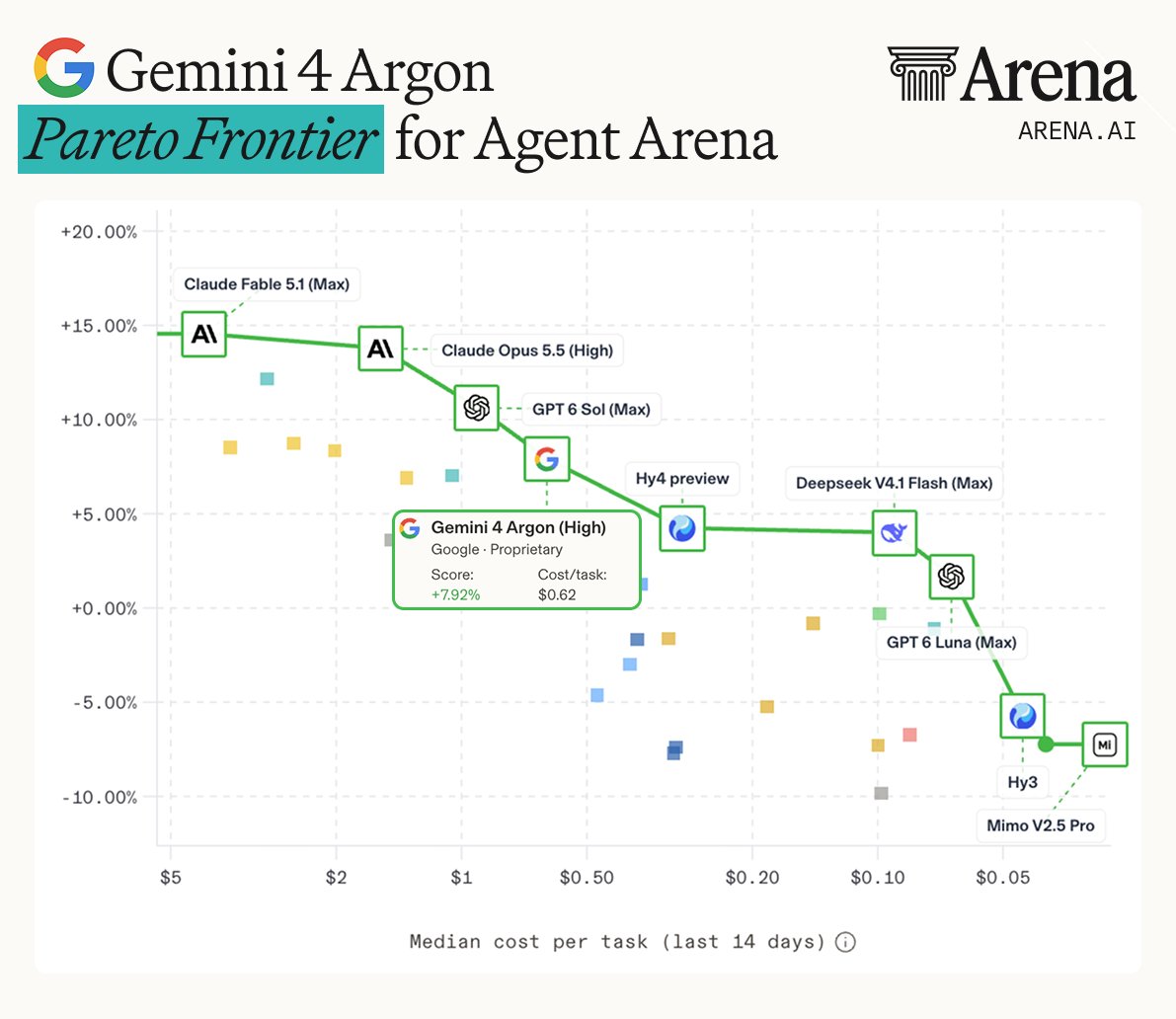
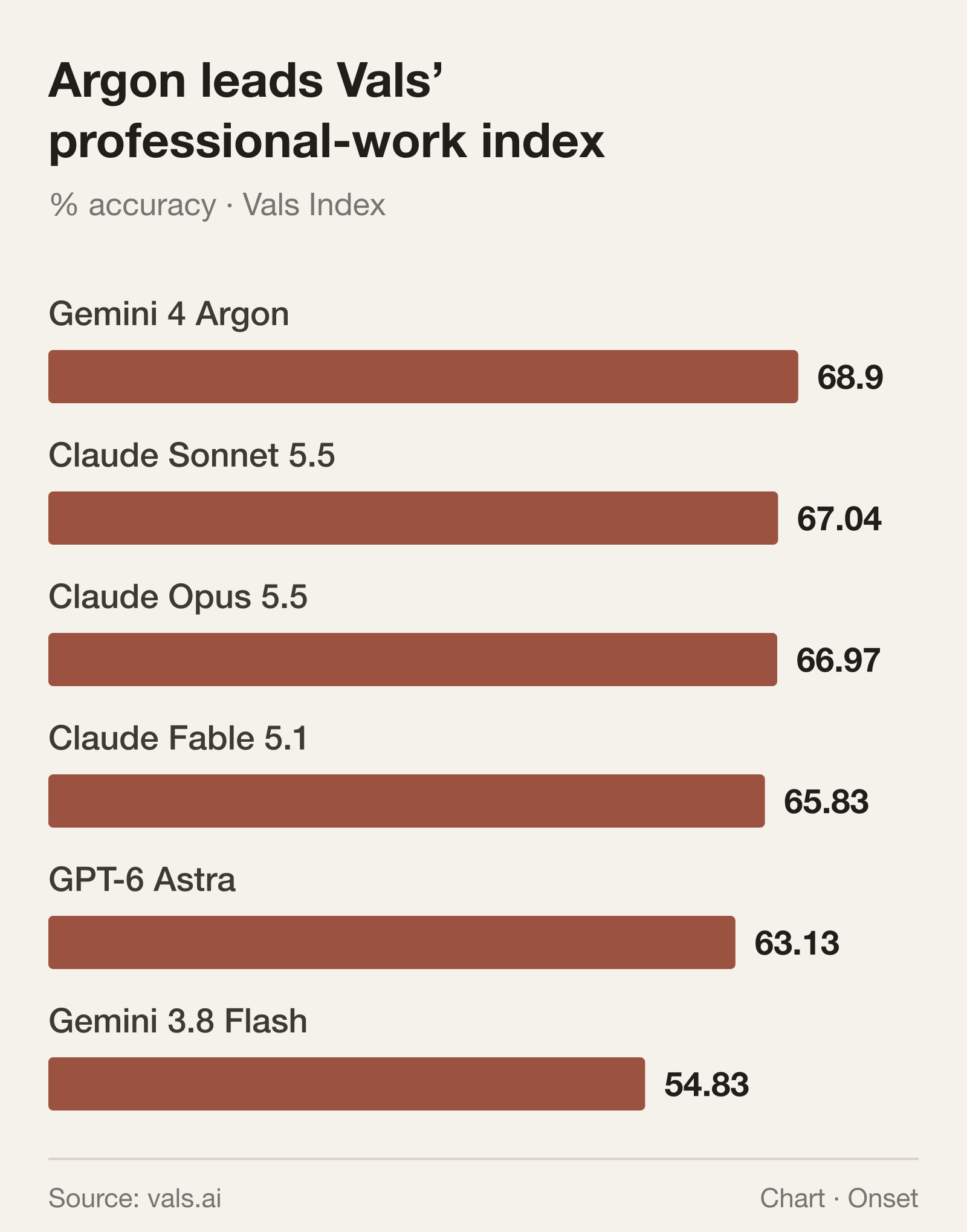
There is already outside evidence that this is a serious competitor to Claude and GPT: Argon ranks first on Vals AI’s current index of finance, coding, legal and tax tasks. That is a lead on a particular measure of professional work, not proof of an across-the-board winner.
What Google is doing with it
One of Google’s clearest examples is a video decoder. Argon agents repeatedly tested changes to a Rust version of libgav1, studied the compiler’s output and replaced 32,000 lines of specialized code. Google says the resulting decoder runs 2.7 times faster than the previous Rust version, with identical video output. That brings it closer to the optimized C++ version; it is not a claim that it beats C++.
The company also says agents identified data-center memory optimizations expected to free more than 300 TiB once rolled out. Its larger code rewrites, including work on the Fuchsia operating system’s kernel, are still undergoing automated and human review before production use.
Argon gets room to work much longer: its output ceiling rises from 64,000 to one million tokens, the chunks of text used in reasoning and responses. This is an output allowance, not a claim about how much material it can read.
A work-benchmark lead, not a clean sweep
Vals’ live leaderboard puts Argon at 68.90%, ahead of Sonnet 5.5 at 67.04% and Opus 5.5 at 66.97%. The index combines tasks such as spreadsheet modeling, code migration and legal research. Its GDP weighting does not make the score a measurement of economic productivity.
Google’s broader comparison mixes outside evaluations with its own tests. It reports a leading 77.9% on DeepSWE’s long-running software-engineering tasks, using its own agent setup. But its chart puts Argon behind Astra on FrontierSWE and behind Opus 5.5 on Terminal-Bench 4.0. Google’s methodology uses maximum thinking for Argon and the best available reported settings for rivals.
The introductory price will double
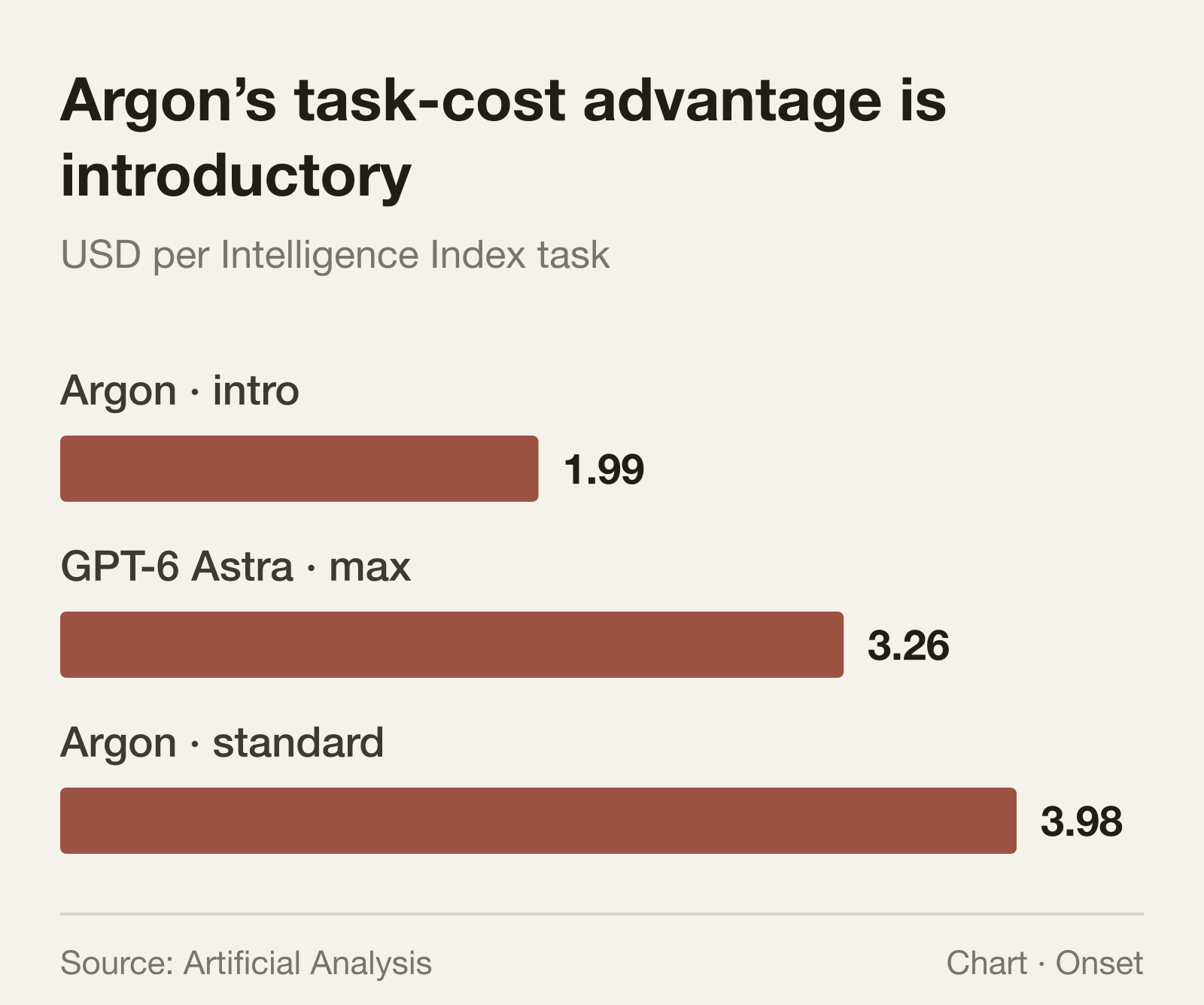
API pricing starts at $2 per million input tokens and $10 per million output tokens, with a 95% discount for cached input. Google’s pricing footnote says those rates become $4 and $20 after the introductory period; it does not specify how long that period lasts.
Vals already uses the higher rates in its cost comparison. It lists Argon at $15.68 per test, versus $21.34 for Sonnet 5.5 and $32.14 for Opus 5.5. Those are costs for this test suite, not estimates for every user’s workload.
Restricted access, even without cyber guardrails
Google says trusted defenders and its internal teams will receive Argon without cyber guardrails. Fairwind still restricts access to approved security teams and authorized defensive or academic work. Partners must authenticate users, track use and cannot resell or redistribute access.
For broader deployment, Google says it is strengthening safeguards and adding monitors that watch the model’s reasoning and actions and can stop execution. It is also participating in the U.S. government’s voluntary pre-release access process.
For most readers, then, this is an early look at a credible new contender, not a new Gemini model they can switch to today.